
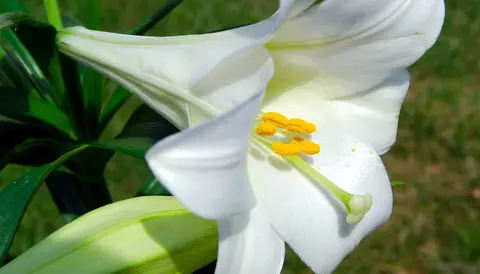
Of all the plants toxic to cats, lilies matter most. A true lily (any Lilium, such as Easter, tiger, Asiatic, Oriental or stargazer lilies) or a daylily can cause kidney failure in a cat. Cornell Feline Health Center says even one bite of an Easter lily can do it, and the FDA warns that a cat can be poisoned by licking pollen off its fur.
Hundreds of other plants are toxic to cats too, but most of them cause mouth pain, drooling or vomiting rather than organ damage. A short list, including sago palm, oleander and lily of the valley, can affect the liver or the heart. Below, we go through the plants and flowers you are most likely to have at home, and what to do if your cat chews one.
Why are lilies so dangerous to cats?
Lilies are so dangerous because a toxin in them, which nobody has identified yet, causes kidney failure in cats and seems to affect cats alone. The FDA notes that dogs who eat lilies may get a mild stomach upset but not kidney failure. In cats, Pet Poison Helpline says any amount of any part can be harmful, including the leaves, stem, flowers, pollen, roots and the water a bouquet stood in.
Speed decides the outcome. The FDA describes early signs such as vomiting, drooling, low energy and not eating within about 12 hours, and kidney failure within 24 to 72 hours. It also says a cat whose treatment starts 18 hours or more after eating a lily generally has kidney failure that cannot be reversed. That is why the advice is to call straight away, before any sign appears.
Which lilies are toxic to cats?
| Plant | True lily or daylily? | What it can do to a cat |
|---|---|---|
| Easter, tiger, Asiatic, Oriental, stargazer, rubrum or wood lily | Yes (Lilium) | Kidney failure, from any part of the plant |
| Daylily | Yes (Hemerocallis) | Kidney failure, from any part of the plant |
| Lily of the valley | No | Heart rhythm problems, vomiting, seizures; dangerous in its own way |
| Gloriosa (flame) lily | No | The roots and tubers can cause serious organ damage |
| Peace lily and calla lily | No | Mouth and throat pain, drooling, vomiting; signs usually settle |
| Peruvian lily (alstroemeria) | No | Mild stomach upset if a lot is eaten |


Which other plants are most dangerous to cats?
A few plants can cause harm well beyond an upset stomach. The ASPCA lists sago palm as a cause of liver failure and death, oleander as a source of heart toxins, and lily of the valley as a cause of an irregular heartbeat, low blood pressure and seizures. It also lists vomiting, weakness and cardiac failure among the signs of azalea poisoning.
Bulbs are a hidden risk. The ASPCA says tulip bulbs hold the most toxin, that daffodil bulbs are the most poisonous part of that plant, and that eating a lot of cyclamen tuber can cause heart rhythm problems and seizures. A cat that digs in a pot of spring bulbs can find the worst part of the plant.
Which common houseplants and flowers are toxic to cats?
| Plant | Signs the ASPCA lists in cats |
|---|---|
| Pothos, philodendron, monstera, dieffenbachia, peace lily | Burning and irritation of the mouth, drooling, vomiting, trouble swallowing |
| Snake plant | Nausea, vomiting, diarrhea |
| Aloe | Vomiting, lethargy, diarrhea |
| Jade plant | Vomiting, depression, wobbly walking |
| Kalanchoe | Vomiting, diarrhea, and rarely an abnormal heart rhythm |
| Tulip and daffodil | Vomiting, drooling, diarrhea; the bulbs hold the most toxin |
| Hyacinth | Intense vomiting, diarrhea, sometimes with blood, depression, tremors |
| Chrysanthemum | Vomiting, diarrhea, drooling, wobbly walking, skin irritation |
| Poinsettia | Irritates the mouth and stomach; the ASPCA calls it overrated in toxicity |
What should you do if your cat ate a lily or chewed a plant?
Move the cat and the plant apart
Take the plant away and look for pollen on your cat's fur or face. If you see any, tell the vet or poison line, who can advise on removing it.
Name the plant
Check the plant label, or take a clear photo of the leaves and any flowers. The FDA suggests bringing the plant, or a photo, to the clinic.
Call your vet or a poison line
For any lily, sago palm, oleander or lily of the valley, call now even if your cat seems fine. For other plants, call and describe what was eaten and how much.
Do not treat it at home
Cornell Feline Health Center says not to make a cat vomit unless a vet or poison control tells you to. Follow the advice you are given.
Which houseplants does the ASPCA list as non-toxic to cats?
- Spider plant
- Boston fern
- Calathea (prayer plant)
- Parlor palm
- African violet
- Moth orchid (phalaenopsis)
- Christmas cactus
- Haworthia
- Cast iron plant
Non-toxic does not mean a plant is food. The ASPCA notes that eating any plant material may cause vomiting and stomach upset, so keep even safe plants out of easy reach of a determined chewer. Before you buy a new plant or accept a bouquet, look it up by name on the ASPCA list, and leave lilies out of any home with a cat.
Questions about plants that are toxic to cats
Are all lilies toxic to cats?
Not all lilies are toxic to cats in the same way, but the ones that cause kidney failure are common. True lilies (Lilium) and daylilies (Hemerocallis) are the dangerous group. Peace lilies and calla lilies are not true lilies; they irritate the mouth. Lily of the valley is not a true lily either, but it affects the heart and is dangerous too.
Is lily pollen or vase water dangerous to cats?
Lily pollen and vase water are both dangerous to cats. The FDA says a cat can be poisoned by licking a few grains of pollen off its fur or by drinking water from a vase of lilies. A bouquet with lilies in it is a risk even if your cat never bites a petal.
How long after eating a lily does a cat get sick?
A cat that ate a lily usually shows early signs within about 12 hours, according to the FDA: vomiting, drooling, low energy and not eating. Kidney failure can follow within 24 to 72 hours, and treatment that starts 18 hours or more after eating generally comes too late. Do not wait for signs: call your vet or a poison line straight away.
Is a peace lily dangerous to cats?
A peace lily is toxic to cats, but not in the way true lilies are, and it is on the ASPCA toxic list. Its crystals burn the mouth, tongue and lips, causing drooling, vomiting and trouble swallowing, and the FDA says the signs usually settle on their own. It does not cause the kidney failure that true lilies do. Call your vet if your cat chews one.
Is it safe to keep lilies where a cat cannot reach them?
Keeping lilies out of a cat's reach is not enough; the safer choice is to leave them out of the house. Pollen drops and drifts, and a cat that brushes past a bouquet can lick it off its fur later. Cornell Feline Health Center suggests not having these plants in the home at all, or keeping cats fully away from where they are.
Is aloe vera toxic to cats?
Aloe vera is toxic to cats, according to the ASPCA's plant list. The ASPCA lists vomiting, lethargy and diarrhea as the signs in cats. Aloe does not cause the kidney failure that true lilies do, but a cat that chews an aloe plant should still be reported to your vet or a poison line, and the plant moved out of reach.
Are snake plants toxic to cats?
Snake plants are toxic to cats, and the ASPCA lists nausea, vomiting and diarrhea as the signs. The ASPCA does not list kidney, liver or heart damage for snake plants, so they are far less dangerous than lilies. A cat that chews one should still be kept away from it, and your vet can advise if the signs do not settle.
Is pothos toxic to cats?
Pothos is toxic to cats. The ASPCA lists golden pothos, along with philodendron, monstera and dieffenbachia, as causing burning and irritation of the mouth, drooling, vomiting and trouble swallowing. Keep a trailing pothos well out of jumping range or choose a non-toxic plant such as a spider plant instead.
Are succulents safe for cats?
Some succulents are safe for cats and some are not, so check each one by name. The ASPCA lists aloe, jade plant and kalanchoe as toxic to cats, with kalanchoe rarely affecting the heart rhythm. Haworthia and Christmas cactus are on the ASPCA's non-toxic list, though eating any plant can still upset a cat's stomach.
Is a spider plant safe for cats?
The spider plant is on the ASPCA's list of plants that are non-toxic to cats. The ASPCA still notes that eating any plant material may cause vomiting and stomach upset, so a cat that chews a spider plant a lot may still be sick. Keep it where a determined chewer cannot strip it.