
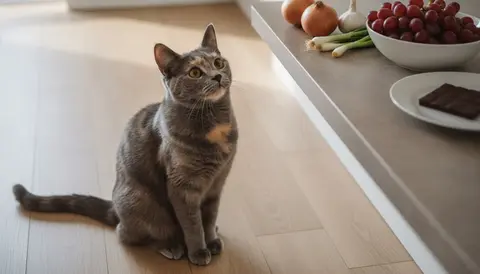
The human foods that are most toxic to cats are onions, garlic and their relatives, chocolate and caffeine, alcohol and raw yeast dough. Grapes and raisins belong on the list too, as a precaution. Cats are the species most sensitive to onions and garlic, and the Merck Veterinary Manual records poisoning after less than a teaspoon of cooked onion.
Other foods are not poisons but still cause trouble: milk can upset a cat's stomach, and raw meat, raw eggs and bones bring germs and injury risks. We take each group in turn below, with the signs to watch for and ways to keep the food out of a curious cat's reach.
Which human foods are toxic to cats?
| Food | What makes it harmful | Signs to watch for |
|---|---|---|
| Onion, garlic, chives, leeks, shallots | Compounds that damage red blood cells and can cause anemia | Vomiting, drooling, weakness, pale gums, red urine; often days later |
| Chocolate, cocoa, coffee, tea, energy drinks | Theobromine and caffeine, which stimulate the heart and nerves | Vomiting, diarrhea, restlessness, fast heartbeat, tremors, seizures |
| Alcohol, including in desserts and sauces | Absorbed quickly and depresses the nervous system | Vomiting, wobbly walking, trouble breathing, tremors |
| Raw yeast dough | Swells in the stomach and produces alcohol as it ferments | Painful, bloated belly, signs of alcohol poisoning |
| Grapes, raisins, currants | Unknown in cats; they can damage the kidneys in dogs | Not established in cats; call your vet if any are eaten |
| Xylitol (sugar-free gum, sweets, some peanut butters) | Can cause low blood sugar and liver damage; Cornell lists xylitol gum among foods dangerous to cats | Not well described in cats; call your vet if any is eaten |
| Salty snacks and seasonings | Large amounts can cause salt (sodium) poisoning | Thirst, vomiting, diarrhea, tremors, seizures |
Can cats eat onions and garlic?
No, cats should not eat onions or garlic in any form. Onions, garlic, chives, leeks and shallots all belong to the Allium family, and the Merck Veterinary Manual says sulfur-containing compounds in them are thought to damage red blood cells. The Merck Veterinary Manual names cats as the most susceptible species, followed by dogs, and rates garlic as three to five times more potent than onion. The damaged cells break down, which can lead to anemia.
Concentrated forms are the biggest risk. The Merck Veterinary Manual says most cases in cats and dogs come from concentrated forms such as dried flakes, powders and dry onion soup mixes, and VCA notes that a teaspoon of garlic powder is about eight fresh cloves. That makes gravies, stock, seasoned leftovers and garlic supplements easy ways for a cat to eat more than it seems.
The signs are slow. The Merck Veterinary Manual says the red blood cell damage typically shows three to five days after eating, with signs such as weakness, pallor, yellowing and collapse. VCA adds drooling, vomiting, a raised heart rate, panting, pale gums and red urine. A cat can seem fine on the first day, which is why the advice is to call a vet when you know it ate an Allium, not when signs appear.


Is chocolate toxic to cats? What about caffeine, alcohol and grapes?
Yes, chocolate is toxic to cats. Chocolate and caffeine contain methylxanthines, chiefly theobromine and caffeine. The ASPCA lists vomiting, diarrhea, panting, thirst, hyperactivity, an abnormal heart rhythm, tremors and seizures among the signs. The darker the chocolate, the higher the risk: baking chocolate and cocoa powder carry the most, white chocolate the least. Cornell Feline Health Center singles out baker's chocolate as particularly dangerous.
Alcohol is absorbed fast, so the ASPCA says to act promptly. It can cause vomiting, poor coordination, breathing trouble, coma and death. Raw bread or pizza dough adds a second problem: the yeast keeps rising in the warm stomach, causing painful bloating, and the fermenting dough makes alcohol as it goes.
Grapes and raisins are a known danger to dogs, where they can damage the kidneys. VCA says it is not yet known whether they cause the same poisoning in cats, and recommends not giving them. Cornell Feline Health Center lists grapes and raisins among foods that can be severely disabling to a cat. Treat an eaten grape as a reason to call your vet.
Can cats drink milk? What about raw meat, fish and eggs?
Milk is not a poison, but it is a poor drink for cats. The ASPCA notes that pets have little of the enzyme that digests lactose, so milk and other dairy can cause diarrhea or an upset stomach. A cat that eats a complete cat food gets nothing from a saucer of milk that it needs.
Raw meat and raw eggs can carry Salmonella and E. coli, which the ASPCA warns can harm pets and people alike. Bones can injure the gut or block it, sometimes badly enough to need surgery. Raw fish has its own problem. It contains thiaminase, an enzyme that destroys thiamine (vitamin B1), and the Merck Veterinary Manual lists raw fish diets among the causes of thiamine deficiency, which it says is most common in cats.
What human foods can cats safely eat?
A few plain human foods are safe for cats in small amounts: cooked, boneless chicken or other lean meat with no seasoning, a few pieces of cooked, boneless fish, and some plain vegetables such as carrots, peas or broccoli. Cats Protection still recommends against feeding human food in general, and says any extra should come out of the day's normal food allowance.
Keep the amounts small. The ASPCA Animal Poison Control Center says snacks should make up no more than five percent of a pet's daily calories, and Cats Protection warns that feeding only cooked chicken for a long time can lead to nutritional deficiencies. If your cat has a health condition or eats a prescription diet, ask your vet before offering any human food.
Human foods cats can have in small amounts
| Food | How to offer it | What the sources say |
|---|---|---|
| Chicken, turkey or other lean meat | Cooked, plain, boneless and unseasoned | Cats Protection says cooked and boneless, within the daily allowance; the ASPCA says lean cooked meat free of bones and seasoning is okay |
| Fish | Cooked, bones removed, a few pieces at a time | Cats Protection; raw fish can cause thiamine deficiency (Merck Veterinary Manual) |
| Tuna canned for people | An occasional small amount only | Cats Protection says a little may not cause harm but it should not be fed regularly, as it can be high in salt and mercury |
| Carrots, peas, corn, broccoli, spinach | Plain, in small pieces, unseasoned if cooked, if your cat is keen | Cats Protection lists these; the ASPCA says to skip seasonings on cooked vegetables |
| Cheese, milk and other dairy | Best avoided | Most cats are lactose intolerant, says Cats Protection, and dairy can upset the stomach |
How do you keep unsafe foods away from your cat?
- Keep onions, garlic and spice jars in closed cupboards, not on open shelves or the counter.
- Put a lid on the kitchen bin, or keep it behind a cabinet door.
- Do not share plates of leftovers, gravy, soup or stock, which often hold onion or garlic.
- Store chocolate, baking cocoa, coffee and tea where a cat cannot climb to them.
- Leave rising dough in a closed oven or a room the cat cannot enter.
- Never leave drinks with alcohol where a cat can lap them, and empty glasses after a party.
- Keep grapes, raisins and fruit bowls out of reach, and pick up anything dropped on the floor.
- Ask guests not to feed the cat from the table, especially at holidays.
Questions about foods that are toxic to cats
How much onion or garlic is toxic to a cat?
Very little onion or garlic is enough to poison a cat. The Merck Veterinary Manual records poisoning in cats after less than a teaspoon of cooked onion, and garlic is stronger than onion. Powders and dried flakes are concentrated, so a small amount of seasoning counts. If your cat ate any, call your vet.
My cat ate a little chocolate. What should I do?
A cat that ate chocolate needs a call to your vet or a poison line, even if it seems fine. Tell them what kind of chocolate it was and roughly how much. Dark and baking chocolate are the most dangerous, white chocolate the least. Do not try to make your cat vomit unless they tell you to.
Can cats eat tuna or other fish?
Cats can have a few pieces of cooked, boneless fish, but raw fish and a regular diet of human tuna are a problem. Cats Protection says canned tuna made for people can be high in salt and mercury. The Merck Veterinary Manual lists raw fish diets as a cause of thiamine deficiency, which it says is most common in cats, because raw fish contains an enzyme that breaks the vitamin down. Ask your vet before adding fish of any kind to your cat's regular diet.
Is cheese or yogurt safe for cats?
Cheese and yogurt are not toxic to cats, but the ASPCA notes that pets digest lactose poorly, so milk and dairy can cause diarrhea or an upset stomach. Cats Protection also says most cats are lactose intolerant. If you skip dairy treats, your cat misses nothing it needs, since a complete cat food already covers its diet.
Why are cats more sensitive to onions than dogs?
The Merck Veterinary Manual names cats as the species most susceptible to onion and garlic poisoning, ahead of dogs, and the ASPCA also says cats are more susceptible. In practice, that means keeping every form of onion and garlic away from your cat.