
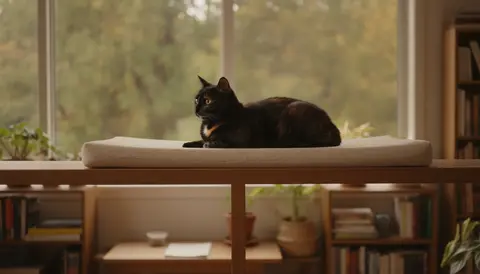
To keep an indoor cat happy, give it daily chances to hunt, climb, hide and rest, and keep its day predictable. In practice that means short play sessions that end in a catch, some food it has to find or work for, high perches and hiding spots, and toys you swap around so they stay new.
Those needs come from how cats are built. The AAFP and ISFM environmental needs guidelines describe the cat as a solitary hunter that may eat 10 to 20 small prey a day, and say predatory behavior happens even in well-fed cats. An indoor cat keeps that urge to hunt, and it needs somewhere to put it.
What does an indoor cat need to be happy?
| Need | What it looks like at home | Why it matters |
|---|---|---|
| A safe place | A box, covered bed or high shelf where the cat can withdraw, at least one per cat | Being able to withdraw gives a cat some control over its surroundings |
| Separate key resources | Food, water, litter, scratching, play and resting spots in different places | Spreading resources out lowers the risk of stress and stress-related disease |
| Play and hunting | Wand play that ends in a catch, food puzzles, kibble tossed to chase | Without these outlets a cat can become overweight, bored or frustrated |
| Friendly, predictable contact | Short, regular attention that the cat starts and ends | Predictability and routine help a cat cope |
| Familiar smells | Wash bedding in turns so some always smells of the cat; skip scented cleaners near its spots | Cats rely on scent to feel at home; strange smells can unsettle them |
How do you play with an indoor cat so it feels like hunting?
Pick the right moment
VCA suggests starting play just before the times your cat is normally active or comes looking for attention. A cat that is already alert and curious will join in faster than one woken from a deep sleep.
Let your cat catch it
End each chase with a catch. The guidelines say letting the cat capture the toy simulates a successful hunt, and large, soft toys that can be raked and bitten give it something to finish on.
Put string toys away
Never leave a wand toy or anything with string out when you are not there. VCA warns that swallowed rope or string is very dangerous for cats, and Cornell Feline Health Center advises avoiding toys with small or strand-like parts.

How much play does an indoor cat need?
An indoor cat needs play every day. VCA recommends at least three short play sessions a day, and the RSPCA advises spending plenty of time playing with an indoor cat daily. None of the sources we read sets a number of minutes, so watch your cat: stop while it is still keen rather than when it walks away.
Needs change with age. The AAFP and ISFM guidelines say kittens usually need longer and more intense play, while older cats still need to play, though the type and intensity of their play may need to change. In a home with more than one cat, the guidelines suggest playing with each cat at separate times and places, so no cat has to compete.
How can feeding keep an indoor cat busy?
Feeding can keep an indoor cat busy when some of the food has to be found or worked for. The AAFP and ISFM guidelines suggest hiding food in several places, tossing kibble for the cat to chase, and using puzzle feeders or timed feeders that give small, frequent meals. That lets a cat stalk, catch and eat as it would when hunting.
VCA suggests food puzzles for part of each meal and dividing the day's food between several dishes around the home, rather than leaving food out all day, which can contribute to obesity, especially in less active cats. The RSPCA suggests splitting the daily amount into several small meals given at the same times each day.
Start any food puzzle easy. A 2016 review in the Journal of Feline Medicine and Surgery advises that at first, getting food out should take about as little effort as eating from a bowl, with the puzzle filled generously. Check that your cat is actually eating its full ration while it learns.
Why do indoor cats need high places and hiding spots?
Indoor cats need high places and hiding spots because a cat that feels threatened prefers to withdraw rather than confront. The AAFP and ISFM guidelines describe a safe place as private and secure, often raised, and say a cat feels safer when it cannot see a threat, even if its whole body is not hidden.
The guidelines recommend at least as many safe places as there are cats, each big enough for one cat. VCA suggests cat trees in the rooms where the family spends time, high resting spots with a soft, non-slip bed, and a window perch with an interesting view. VCA adds that a cat should rest up high by choice, not be stuck there because it is frightened.
Scratching belongs here too. The RSPCA advises at least one tall, sturdy scratching post for an indoor cat, and Cornell Feline Health Center suggests a post at least as tall as your cat standing on its hind legs with its front legs stretched up.
Indoor cat checklist, room by room
- A perch by a window with a view outside
- A cat tree or a route of shelves in the room where the family spends most time
- At least one hiding place per cat, each big enough for one cat
- At least one tall, sturdy scratching post
- Food, water, litter and beds in separate spots, not lined up together
- A food puzzle, or part of the day's food hidden around the home
- A box of toys out of sight, with only a few out at a time
- Wand and string toys put away after every session
- Some of the cat's bedding left unwashed when you wash the rest
How can you tell if an indoor cat is bored?
A bored indoor cat may sleep more and move less, gain weight, or turn its energy on the house. The RSPCA says indoor life can become predictable and boring, which can lead to stress, inactivity and obesity, and that scratching can be a sign of boredom. Cornell Feline Health Center links boredom to destructive behavior such as chewing.
The AAFP and ISFM guidelines go further: a cat with no outlet for hunting can become frustrated, which can show as overgrooming, stress-related illness or aggression aimed at people or other cats. Those same signs can come from pain or illness, so a change in behavior is a reason to see your vet before you buy new toys.
Can a cat be happy living indoors?
A cat can be happy living indoors when the home gives it enough to do. The RSPCA says indoor life keeps cats away from busy roads and from viruses, fleas and ticks, but that it is harder for cats with lots of energy, cats that love to explore and cats used to going outside.
Cats with a disability or medical problem may be better off indoors, the RSPCA adds. The AAFP and ISFM guidelines leave the choice between indoors, outdoor access or a mix to each owner, shaped by local custom and rules. For a safe middle ground, VCA describes harness walks once a cat is comfortable on a leash indoors, and enclosures built out from a window or door.
What each source recommends
| Source | Play | Feeding | Going outside |
|---|---|---|---|
| AAFP and ISFM guidelines | Wand play that copies prey and ends in a catch; rotate toys; no set number of sessions | Hide food, scatter or toss kibble, puzzle and timed feeders for small, frequent meals | The owner's choice, shaped by local custom and rules |
| VCA | At least three short sessions a day, just before the cat's active times | Puzzles for part of each meal; avoid free feeding; split food between dishes around the home | Harness walks once comfortable indoors, or an enclosure off a window or door |
| RSPCA | Plenty of play every day with rod toys and prey-sized moving objects | Several small meals at the same times each day; treat balls; count treats | Indoors avoids roads and infections but can become predictable and boring |
| Cornell Feline Health Center | No set amount; rotate toys; avoid string and small parts | Toys that release treats when moved, or a large ball in the food bowl | Not covered on the pages we read |
Guides for play, climbing and food puzzles
Questions about keeping an indoor cat happy
How much playtime does an indoor cat need?
An indoor cat needs some play every day. VCA recommends at least three short play sessions a day, started just before the times the cat is usually active. The RSPCA advises plenty of daily play with rod toys and fast-moving, prey-sized objects. Neither source sets an exact number of minutes.
How do I know if my indoor cat is bored?
A bored indoor cat may be inactive, gain weight, scratch or chew things, or groom too much. The RSPCA links indoor boredom to stress, inactivity and obesity, and the AAFP and ISFM guidelines link a lack of hunting outlets to overgrooming and misdirected aggression. Illness can cause the same signs, so see your vet first.
Is it cruel to keep a cat indoors?
Keeping a cat indoors need not be cruel when its needs are met. The RSPCA says indoor life protects cats from roads and infections but can become boring, so indoor cats need more of their owner's time. The AAFP and ISFM guidelines leave the choice to each owner and focus on play, climbing, hiding and hunting-style feeding.
Should I get a second cat to keep my indoor cat company?
A second cat is not a cure for boredom. The AAFP and ISFM guidelines say cats can live comfortably alone or in social groups, but they hunt alone, so a second cat does not replace play. Two cats also need separate food, water, litter and resting spots. Our guide to introducing a new cat covers the process.
Do indoor cats need to go outside?
Indoor cats can live well without going outside when the home gives them enough to do. The RSPCA says indoor life is harder for cats with lots of energy, cats that love to explore and cats used to going out. VCA describes two safer ways to add outdoor time: harness walks once the cat is comfortable, and an enclosure off a window or door.
Can I leave an indoor cat alone during the day?
An indoor cat left alone should have things to do while you are out. The RSPCA suggests leaving toys and food puzzles out to reduce boredom and avoiding long periods alone. Put wand and string toys away before you go, since VCA warns that swallowed string is very dangerous.