
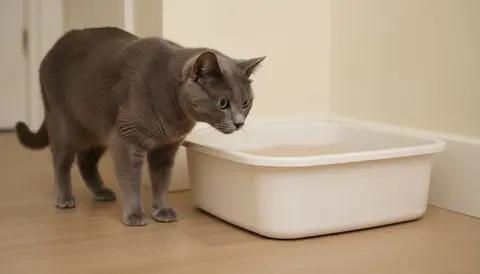
A cat peeing outside the litter box is usually telling you one of two things: something hurts, or something about the box, the litter or the household has become hard to live with. The AAFP and ISFM house-soiling guidelines sort the causes of a cat that stops using the litter box into medical problems, bladder inflammation with no clear cause, urine marking, and reactions to the cat's surroundings or other animals.
The order of the fixes matters. A vet check comes first, because cats with medical problems may not look sick, as Cornell Feline Health Center points out. Then you work out whether the cat is marking or toileting, and fix the box, the litter and the stress around it. The sooner you start, the less chance the new spot turns into a habit.
Why is my cat peeing outside the litter box?
Pain or illness is the first thing to rule out when a cat pees outside the litter box. The AAFP and ISFM guidelines list bladder stones, chronic kidney disease, urinary tract infections, diabetes, an overactive thyroid, arthritis and other orthopedic problems, and tumors. VCA adds liver disease, age-related cognitive decline, and bowel problems such as colitis, constipation and anal sac disease, which matter when it is stool rather than urine outside the box.
Some of these make a cat need to go more often or more urgently than it can reach the box. Others make going painful, and the ASPCA notes that a cat can link the box with that pain and keep avoiding it even after it has recovered. Stiff joints can make a high-sided box hard to climb into, and the AAFP and ISFM guidelines suggest a box with a very low entry for a cat with arthritis.
Stress can affect the bladder as well. Cornell Feline Health Center says stress seems to be an important factor in feline idiopathic cystitis, a painful bladder inflammation with no single known cause, and lists changes in the home, the feeding schedule and the number of animals as possible triggers.
Is it urine marking or toileting?
Urine marking, often called spraying, is communication rather than a toilet problem. The AAFP and ISFM guidelines describe a cat standing with its tail up and twitching, leaving a small amount of urine on a vertical surface such as a wall, a door or the side of a sofa. A marking cat may keep using its box normally at the same time.
Toileting outside the box looks different: the cat squats and leaves a normal-sized puddle or stool on a flat surface, often one it seems to prefer, like a rug, a bed or a bathtub. VCA notes that cats rarely, if ever, use stool to mark, so stool outside the box points to a toileting problem.
Marking or toileting: what to look for
| Sign | Urine marking (spraying) | Toileting outside the box |
|---|---|---|
| Posture | Standing, tail raised and often quivering | Squatting, as in the box |
| Where | Mostly vertical surfaces: walls, doors, furniture | Flat surfaces: rugs, beds, tile, the bathtub |
| Amount | Usually small | A normal amount of urine, or stool |
| Box use | Often carries on using the box as well | Uses the box less, or not at all |
| Common triggers | A new cat, outdoor cats, a move, new furniture | The box, the litter, its location, pain |
Neutering reduces marking a great deal, but not completely. The AAFP and ISFM guidelines put it at about 10% of neutered males and 4% of neutered females that keep marking, and Cornell Feline Health Center gives similar figures. In neutered cats, marking is usually a reaction to change or tension, such as a new cat, cats outside the window, or a move.
What about the box puts a cat off?
A dirty, scented, covered, cramped or badly placed box is the most common non-medical reason a cat avoids it. The ASPCA lists a dirty or rarely scooped box, liners and hoods, scented litter or cleaners, a box that is too small or hard to get into, and litter that is too deep. VCA adds an old box that holds onto smells, and a covered box that becomes hard to get into as a cat gets heavier or stiffer.
Where the box sits matters as much as what is in it. VCA mentions boxes in noisy or busy places, near a furnace or washing machine, or down a flight of stairs that an older cat struggles with. In a home with several cats, another cat waiting near the box can be enough to keep a timid cat away, which is why Cornell suggests open boxes and more than one way out.
A cat that goes on the same rug or bath mat again and again may simply prefer that surface. Cornell Feline Health Center says cats with an aversion may choose soft surfaces like carpet, beds and clothes, or hard ones like tile and bathtubs.
Box setup to check
- Scooped at least once a day and fully washed about weekly
- Unscented, fine, clumping litter, about one to two inches deep
- No liner, no hood and no scented deodorizer
- Large enough for the cat to turn around, with a low side for an older or stiff cat
- In a quiet spot away from its food bowl and noisy appliances
- One box per cat plus one, spread across the home
- Nothing changed recently: litter brand, box type or location
If the box or litter needs changing
Can stress make a cat stop using the litter box?
Stress can make a cat stop using the litter box, even when the box itself is fine. The ASPCA lists moving home, new pets or people, and changes in routine as stressors, and Cornell Feline Health Center adds a new cat in the house or cats outside the window. Tension between cats in the same home can also cut one of them off from the box, because a cat that feels watched or blocked will find somewhere else.
A cat going outside the box is not being spiteful, and punishing it makes things worse. Cornell says never to hit, kick or scream at a cat for house soiling, because the anxiety it causes can deepen the problem, and that rubbing its face in the mess does not work. The AAFP and ISFM guidelines treat not punishing as a basic principle of keeping a cat's world feeling safe.
What to do when a cat stops using the litter box
Undo recent changes
If you changed the litter, the box or its location shortly before the problem began, VCA suggests going back to what worked.
Make the box easy to like
Work through the checklist above: clean, unscented, roomy, quiet and easy to reach, with one more box than you have cats.
Make the old spot less appealing
VCA suggests double-sided tape or an upside-down carpet runner on the soiled area, or giving it a new use such as feeding or play, while the box itself stays inviting.
Keep a simple log
Note where and when each accident happens. VCA says that if the problem has not resolved after a couple of weeks, it needs a closer look, so go back to your vet.
Questions about cats peeing outside the litter box
Why does my cat pee right next to the litter box?
A cat that pees right next to the litter box usually wants to use that spot but dislikes something about the box: dirty litter, a scented litter, a hood, a liner, high sides or a box that is too small. The ASPCA lists all of these. Peeing beside the box can also be a sign of pain, so a vet check comes first.
Why has my older cat stopped using the litter box?
Older cats often have arthritis, kidney disease, an overactive thyroid or some cognitive decline, all of which the AAFP and ISFM guidelines or VCA link to house soiling. A box with a very low entry, placed close to where the cat sleeps and away from stairs, can help once your vet has checked the cat.
Is my cat peeing outside the box out of spite?
A cat peeing outside the box is not acting out of spite, and cats do not soil to get back at people. The usual reasons are pain, a box the cat dislikes, or stress, and punishment tends to add to the stress. Cornell Feline Health Center advises never hitting, kicking or shouting at a cat for house soiling.
Will a cat peeing outside the litter box stop on its own?
Peeing outside the litter box can become a habit if it is left alone. Cornell Feline Health Center says to deal with house soiling promptly, before the cat gets used to its new spot, and a medical cause such as a urinary problem will not fix itself. Start with a vet visit, then work through the box setup.
Why does my cat poop outside the litter box but pee inside it?
A cat that pees in the box but poops outside it may have a bowel problem that makes passing stool uncomfortable. VCA lists colitis, constipation and anal sac disease, and notes that cats rarely, if ever, use stool to mark. The ASPCA adds that some cats use a box for only one of the two, so a second box can help once your vet has checked the cat.